
Guide to Nevada Divorce Records
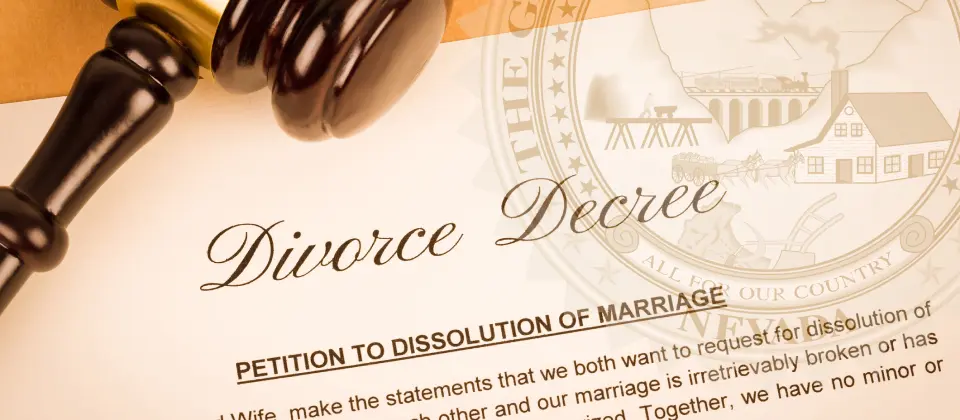
Divorce laws and access to court records can vary significantly from one state to another. Divorces in Nevada are filed with the District Court and result in an official set of documents that terminate a marriage. The divorce record consists of these documents, which may be used for legal verification or administrative or personal cases later.
A divorce case in Nevada usually begins when one spouse files a complaint for divorce with the District Court in the county where either spouse resides. As the case progresses, the court issues a variety of legal filings, motions, and orders. These documents collectively make up the official divorce record maintained by the court.
The content of a Nevada divorce record will vary depending on the type of record requested. However, it generally contains information such as:
The names of both parties to the divorce
The county and district court where the case was filed
The case or docket number assigned to the divorce proceeding
The date the divorce judgment was finalized
Court decisions involving child custody, parenting time, property division, and child support
The type of divorce judgment, such as contested or uncontested
Nevada is a community property state, meaning that when a couple divorces in this state, everything they acquired during the marriage is generally divided equally. This includes both property and debts. When deciding on custody and a parenting plan, courts consider the best interests of the child.
The county District Courts in Nevada, where the divorce was granted, keep the divorce records. Some summary information may also be indexed by state vital records offices, but the full case files remain with the court. Older cases may be stored in archived paper files, while more recent cases are kept electronically on the court's system.
The process of divorce sometimes involves property division and child custody. Knowing how divorce works in Nevada and how records are created and maintained can help you locate the documents you need.
Is Nevada a 50/50 Divorce State?

Yes. Nevada follows a community property system, meaning most property and debts acquired during a marriage are equally owned by both spouses. Consequently, when a couple divorces, the court usually divides their marital assets and debts equally (50/50) between the spouses.
The Nevada Revised Statutes 125.150 provides that the court should “to the extent practicable, make an equal disposition of the community property of the parties.” Occasionally, though, a judge may divide property unequally if there is a compelling reason and the court explains that reason in writing.
Nevada's community property system differs from the equitable distribution system used in many other states. In equitable distribution states, courts divide marital property based on what is considered fair, which may or may not be equal. In contrast, Nevada begins with the presumption of equal ownership, meaning both spouses are assumed to have a 50% interest in property acquired during the marriage.
Although Nevada is a community property state, judges sometimes consider other factors to guide them in dividing the parties' property and debt. These factors can include:
Length of the marriage: Longer marriages are likely to involve more shared finances and assets, which may affect property division.
Contributions of each spouse: Courts recognize both financial and non-financial contributions, including employment income, homemaking, and raising children.
Income and earning capacity: When the earning power or prospects of the spouses differ vastly, the court will consider the effect property division may have on the economic circumstances of each spouse post-divorce.
Marital vs. separate property: When making the property division decision, the court must carefully distinguish between the marital estate assets and separate estate assets.
Fault considerations: Nevada is a no-fault divorce state, which means misconduct, such as adultery, usually does not control the property division. However, in situations where one spouse has squandered assets or committed wrongful financial acts, the court may consider this when dividing marital assets.
Types of Nevada Divorce Records

Nevada has two types of divorce records, each serving a distinct purpose. One record summarizes the divorce for administrative use, while the other has the full legal details required for enforcement or litigation.
For instance, if you need evidence of your divorce to obtain a new marriage license or to update your personal records, you need a divorce certificate. However, if you are dealing with a legal issue, such as enforcing a child support order, dividing property, or verifying spousal support, you need the divorce decree, which contains all of the court's detailed orders.
Nevada Divorce Certificate (Certificate of Divorce)
This document, issued by the Nevada Department of Public Health, provides a summary of a divorce. A divorce certificate contains very little information. This typically includes the spouses' names, the divorce date, and the county or city where the divorce took place. Because divorce certificates contain limited information, they cannot be used as a substitute for the divorce decree.
Nevada divorce certificates are open to the public, and you can access them if you are a person named on the certificate, an immediate family member, or if you are able to establish a legal interest.
Divorce Decree (Final Judgment of Divorce)
In Nevada, the divorce decree, also called the Final Judgment of Divorce, is issued by the District Court that handled your divorce case. The final divorce orders are the most comprehensive and authoritative record of your divorce and detail all orders made by the court. It serves as proof that your marriage was legally ended and provides detailed information and instructions for both spouses to follow.
A typical divorce decree in Nevada will contain the following rulings.
Property and debt division: A divorce decree should detail how marital assets and debts are shared between the spouses
Child custody and support: This contains all decisions about legal and physical custody, parenting time, and child support obligations
Alimony or spousal support: A divorce decree details the court-ordered payments or arrangements for financial support
Final judgment dates: The official date the judge signed the decree, finalizing the divorce
How to File for Divorce in Nevada (Step-by-Step)
In Nevada, the residency requirement for filing a divorce is much shorter than in many other states. Per Nevada Revised Statutes 125.020, before you can file a divorce complaint in the state, at least one spouse must have lived in the state for a minimum of six weeks with the intent to remain there. This six-week rule applies whether you file alone or with your spouse as a joint petition, and it must be satisfied immediately before filing the case.
Once that requirement is satisfied, decide whether your divorce will be contested or uncontested. This depends on how much agreement you and your spouse share.
Uncontested Divorce: An uncontested divorce is often the fastest and simplest way to end a marriage in Nevada because both spouses are in full agreement on all major issues. This includes everything from how property and debts are divided to arrangements for child custody and parenting time, as well as child support, spousal support, and alimony. Due to the fact that there are no issues for the court to resolve, this process goes faster than a contested divorce and costs significantly less.
The court's function in contested divorces is mainly to review your agreements to determine whether they are fair, complete, and in compliance with Nevada law. As soon as the judge signs off on your agreements, they become part of the final judgment of divorce and are binding.
Contested Divorce: A contested divorce happens when you and your spouse cannot agree on one or more important issues. Common disputes when a marriage is ending include property division, responsibility for debt, and arrangements for children. Disagreements must be resolved through the court. However, this type of divorce is longer, more complex, and more expensive than an uncontested divorce.
In a contested case, both spouses will engage in discovery, which requires exchanging relevant financial documents and other pertinent information. If the parties remain unable to resolve the dispute, the case goes to trial, and the judge decides on all pending issues. After a ruling is issued, both sides must comply with the court's order, even if they disagree.
If these requirements are satisfied, you can begin the Nevada divorce process by following the necessary filing steps with the District Court in the appropriate county.
Step-by-Step Divorce Process
The steps involved in processing a divorce case may vary by county and whether the divorce is contested or uncontested. However, the filing process until the decree is issued follows the process below.
Prepare the Filing Packet
This is where you will gather the necessary paperwork and organize everything to open your divorce case with the Nevada District Court. These documents need to be accurate and complete. They will form the basis of your case, as errors can cause delays.
Identify the Divorce Path: You and your spouse must determine whether the divorce case proceeds as contested or uncontested.
Prepare the Necessary Documents: The following are the necessary documents needed when filing:
Confidential Information Sheet: Use this form to provide confidential information, such as Social Security numbers. Confidential Information Sheet-with Children and Confidential Information Sheet- no Children.
Affidavit of Resident Witness: This form is used to prove that at least one spouse has lived in Nevada for at least six weeks before filing for divorce.
Joint Petition for Divorce: If divorce is uncontested, use this form to explain the full agreement between spouses. Complete this form if filing with no children, and this if filing with children.
Request for Submission: This form asks the judge to review and decide the divorce case without a court hearing.
Decree of Divorce: This form is used to prepare the divorce decree. The divorce decree is first signed by both spouses, and the judge signs it to approve it.
Financial Affidavits: Use this form to disclose your finances, including income, expenses, assets, and debts.
Filing Fees and Fee Waivers (Indigency): Starting a divorce case in Nevada requires paying a filing fee to the court. The fee covers the administrative costs of filing the case and processing the documents. If you cannot afford the filing fee, you may ask the court to waive the fee, also known as filing in forma pauperis. To do this, you will need to fill in a form explaining your finances, including your income and expenses. A judge will hear your request and determine whether you qualify to have the fee cut down, or waived completely, on the basis that you can't afford the divorce.
File the Case
Once you complete your documents and pay the fees, you can go on to file the divorce case in court.
Where to File: At the county level, the Nevada District Court handles divorce matters. Consequently, the case must be brought to the District Court of the county where either spouse resides.
Filing methods: Nevada courts allow several methods to file divorce papers. The following methods are permitted by most courts.
You may file your divorce forms at the District Court Clerk's Office in person. Bring along your completed paperwork and filing fee.
Some counties permit divorce paperwork to be submitted through the mail. Do not forget to attach the completed forms, copies of your documents, and proof of payment for the filing fee.
Some courts in Nevada allow for the filing of documents electronically through an electronic filing (e-filing) system. This choice is generally open to lawyers and occasionally to people filing without a lawyer.
What You Receive: After your paperwork is accepted by the court, the Clerk officially opens the case and provides several important documents, including:
Your divorce case will be assigned a case number, which is its unique identifier.
When the case is contested, you will receive a summons, which lets you know that a divorce case has been filed against you, and you can respond within a specified time period.
The first court notices provide instructions on serving the other spouse in addition to financial disclosure instructions.
Service of Process (Primarily for Contested Cases)
In a contested divorce, which occurs when you and your spouse are not in agreement about one or more issues, the court will require that the other spouse be officially notified of the divorce case. This step, known as Service of Process, ensures that both sides have an opportunity to take part in the lawsuit. You can serve the divorce papers in Nevada through:
Professional process server
County Sheriff's or Marshal's Office
Certified mail
Once your spouse has been served with the divorce papers, the person who served them must fill out a Proof of Service. The Proof of Service shows who was served, what documents were served, when, where, and how. This proof must be filed with the court for this case to continue.
If the spouse is untraceable, the court may allow methods such as publishing a notice in an approved newspaper or another approved alternative. However, you must first prove that you made reasonable attempts to find your partner.
Early Case Phase and Temporary Orders
Once you file the divorce case and your spouse gets properly served, you enter the early case phase. During this time, the court can issue temporary orders to help stabilize the situation while a divorce is pending. These orders do not constitute final decisions. Rather, they help manage important issues pending the resolution of the divorce.
In many divorces, judges often prefer to leave the parties as is so they can go on with their lives as before. When the court makes parenting orders, it will consider the following factors:
Where the children have been living
Which parent has primarily been responsible for the day-to-day care of the children
How the household bills have been paid
In the early phase of a divorce case, there are many things you can do to get yourself organized and ready:
Collect financial documents like bank statements, tax returns, pay stubs, debt details, and information about assets.
Keep a record of important discussions with your spouse about finances, children, or living.
Collect proof to demonstrate to the court your current need for temporary relief. Evidence may be deeds (for real estate or marital residence), pay stubs (for support matters), and school records (for custody).
Follow any temporary court orders, such as those related to custody, support, or property use.
After mediation, the judge may have a hearing to determine whether to issue the following temporary orders:
Temporary child or spousal support
Exclusive use of marital property
Child custody and visitation
Restraining or protective orders if safety is a concern
Financial Disclosures and Discovery
In the early stages of a divorce, couples must provide as much factual information as possible about their financial status. This is so that the court can fairly divide the couple's property and possibly establish child support or spousal support. Both spouses are required to honestly and accurately report their current financial position.
Here are the essential factors of financial discovery in a Nevada divorce case:
Mandatory financial statements: Both spouses are required by law to provide complete and accurate information that reflects the true picture of their finances. This could be income, assets, and liabilities.
Supporting Documentation: Parties may be required to provide documentation to verify the information included in their income disclosure, as well as other financial information, such as pay stubs and bank statements.
Discovery Tools: In some divorces, especially contested ones, if one spouse believes that important financial information is missing, they can use discovery tools to request more details and documents to better understand the couple's finances. Such tools are:
Requests for Documents: Either spouse may demand copies of documents from the other party to build their case. Examples of requested documentation include, but are not limited to: bank statements, business records, property appraisals, and loan or investment documents.
Interrogatories: They are written questions sent from one spouse to the other, requiring the other spouse to answer under oath about their finances.
Subpoenas: Subpoenas are court orders requiring a third party (such as a bank, an employer, an accountant, or an investment company) to produce records regarding the other spouse's financial affairs.
Depositions: Formal interviews with a spouse, conducted under oath by attorneys outside the court. A court reporter is present to record the testimony. If the divorce ultimately goes to trial, the deposition testimony can be used.
Case Management and Court Conferences
As a divorce case progresses through Nevada courts, a judge may call a Case Management Conference (CMC) to assist with the case's organization and progression. A CMC is not a trial. Rather, it gives the judge an opportunity to review the case's status, determine whether the parties are meeting their obligations under the court's timeline, and possibly encourage settlement.
The CMC is usually held after the initial pleadings are filed, the opposing party is served, and basic financial information is exchanged. At the CMC, the judge will review the case's current status and identify which issues remain unresolved. The judge may impose deadlines for the exchange of discovery, the filing of motions, or other actions necessary to resolve the case. Additionally, the judge may suggest that the parties discuss settlement or mediation at that time.
Settlement or Trial
Settlements between spouses are final agreements both parties have reached on all terms of their divorce before a judge makes a decision for the couple. The agreement may cover everything from property division and debt allocation to child custody and child support or alimony payments to each other. Couples may settle their divorce in one of the following ways:
Using a neutral third-party mediator for mediation
Negotiating directly between themselves
Negotiations through attorney-led discussions
If settlement efforts fail and significant issues remain unresolved, the divorce case may proceed to trial. At trial, a judge hears both sides, reviews the evidence, and makes final decisions on all contested issues. At this point, you should work closely with your legal counsel.
At trial, you can expect the following to happen:
Each spouse presents evidence supporting their position and presents witnesses to testify.
Attorneys submit proposed findings of fact and conclusions of law.
The judge issues a final judgment of divorce
Judgment, Waiting Periods, and Finalization
A divorce judgment, or sometimes called a “ Divorce Decree,” is the court's final order that terminates the marital relationship. In cases where the parties have settled on certain issues prior to the entry of a final order, those terms are usually incorporated into the Final Judgment of Divorce (the Decree) itself. If the case went to trial, the judge's rulings would become the terms of the decree.
In many other states, couples must wait weeks or months after filing before the divorce can be finalized. However, in Nevada:
There is no statutory cooling-off period after filing.
The divorce can be finalized as soon as all legal requirements are satisfied and the judge signs the decree.
There is no waiting period to remarry after a divorce is finalized.
Child Custody and Child Support in Nevada Divorces
Custody decisions in Nevada are made under the legal concept of the “best interest of the child. “The judge will not automatically award a child to either parent. Rather, based on information provided about both parents and their respective families, the judge makes an informed decision about which living arrangement best suits the child's needs.
The judge considers the following when making this decision:
The child's relationship with each parent
Each parent's ability to meet the child's emotional and physical needs
Whether the two parents can work together cooperatively
If there has been a history of violence, neglect, or conflict between the two parents
How well the child has adjusted to school, home, and their community
Sometimes, the judge may also take the child's preferences into account
Legal Custody vs. Physical Custody
In Nevada, child custody can be legal and physical.
Legal Custody: A parent with legal custody has the right to make important decisions about a child's life. For example, this could include decisions about educational, health, and religious development. In many cases, Nevada courts will grant joint legal custody so that both parents can make decisions about their children together.
Physical Custody: On the other hand, physical custody concerns the child's day-to-day living arrangements and the time-sharing between the parents. In Nevada, physical custody may be either:
Joint Physical Custody - when the child divides time equally between each parent
Primary Physical Custody - allows the child to reside primarily with one parent while the other parent has a set visitation or parenting time schedule
Child Support Guidelines and Enforcement
Child support in Nevada is calculated based on the State's Child Support Guidelines, taking into consideration the following:
The income of both parents
Cost of health insurance
The number of minor children involved
The amount of time each child spends with each parent
Childcare expense
Once child support is ordered by the court, the paying parent is legally required to follow the payment schedule. If they miss or delay payments, Nevada has many ways to enforce these parents to fulfill their obligation.
To enforce child support, the Nevada Child Support Program uses several different enforcement tools. This is intended to help parents provide financial support for their children by ensuring they receive regular payments from the non-custodial parent. These enforcement tools include:
Wage garnishment from the paying parent's paycheck
Intercepting tax refunds
Suspension of certain licenses
Court enforcement actions if payments continue to be missed
Property, Debt, and Alimony in Nevada Divorces
When a marriage ends in Nevada, one of the most important aspects of the divorce process involves dividing property, allocating debts, and determining whether spousal support (alimony) is necessary.
In Nevada, property is divided into marital and separate property.
Marital Property: Any asset acquired after the couple is married is considered marital property, even if it is in only one spouse's name. Examples include: houses or real estate, vehicles, bank accounts, and investments obtained or developed during the marriage.
Separate Property: In contrast, all property acquired prior to the marriage is considered separate property unless it was given to both spouses together by a third party. Separate property can be property acquired prior to the marriage, monies received through inheritance or gifts intended solely for one spouse, or items that were maintained separately from marital property.
Debt division is equally as important as asset division in a Nevada divorce. The court will look at the debts incurred by either spouse during the marriage, who used or benefited from each debt, and which spouse has the better financial position to pay them off.
Debts that can be considered marital debts are mortgage payments, auto loan payments, credit card payments (balances), and any other type of loans that were acquired by either spouse during their marriage. In determining how to divide marital debts, Nevada courts will consider the following factors:
Each spouses' ability to repay the debt
Who incurred the debt and why
Whether the debt benefited one spouse
How the total marital property is divided.
Alimony, also known as spousal support, is money one spouse pays to the other to help each maintain a standard of living as close as possible to their previous lifestyle together after they divorce. The most common forms include:
Periodic Alimony: An amount paid at regular intervals (e.g., monthly) when one spouse earns significantly less than the other or has been absent from the workforce.
Rehabilitative Alimony: This type of alimony is intended to help a spouse become self-sufficient. This assistance may include paying for education, job training, or vocational development.
Lump Sum Alimony: Instead of making regular payments, this type of alimony is a single payment that satisfies support obligations.
Errors, Omissions, and Corrections in Nevada Divorce Records
Official divorce records are sometimes incorrect due to misspellings, incorrect dates, or missing information. If there is an error on your Nevada divorce certificate, it must be corrected through the county that granted the divorce.
To have a correction made, you would typically need to submit a written request along with documentation showing what the correct information should be, as well as a copy of your divorce record (if one exists). After receiving your request, the court or the clerk's office will review it, and they may charge a processing fee before providing a corrected version of the divorce certificate.
Similarly, errors on your divorce decree are typically corrected through the issuing court, since the decree is the final ruling of a judge, and can't be changed by the Clerk. The court will examine your application and other relevant documentation to determine whether the proposed correction is a clerical error or a substantive change to the divorce decree. If the court determines the error is clerical, it may issue a new order with corrections to the original decree.
Once the corrections are approved, you should then contact the Clerk of the Nevada District Court where your case was heard to obtain certified copies of your updated divorce records.
How to Access Nevada Divorce Records

Divorce records are maintained by different offices; the process for obtaining them may vary. Below are the main ways to request divorce records.
Online Request
Divorce certificates are available online in certain Nevada counties (District Courts), with a limited view on their websites. The website will allow you to see which records exist, find your case details, and request a copy of those documents. Generally, you have to contact the Clerk's Office or County Court where the original document was filed to obtain the document.
In Nevada, a full divorce decree is rarely available online because it contains detailed legal information on property distribution, child custody, and child support. To get a copy of your decree, you will generally have to contact the District Court Clerk's office in the county in which your divorce was finalized. There might be some fees associated with obtaining the document.
In-Person Request
You may obtain certified copies of your divorce decree from the Clerk's Office at the county courthouse where your divorce was finalized (the court that issued the final judgment). Likewise, divorce certificates are usually requested through the Clerk's Office of the District Court.
Typically, when requesting documents in person, you will be required to present a valid photo ID, provide the full names of the parties involved, the date of the divorce, and pay a fee to cover the cost of obtaining the records. Many offices can provide certified copies of divorce records on the same day if the record is available.
Mail Request
To obtain a copy of your divorce decree or certificate via mail, you will need to write to the clerk of the Nevada District Court in the county where your divorce was finalized. Some counties provide request forms on their websites to request the document.
Your letter to the Clerk should contain all relevant information, such as spouses' names, date of divorce, case number, as well as a self-addressed stamped envelope and any applicable fees for copies/certification. The processing time will depend on the court's current workload and may be several weeks after mailing.
The Office of Vital Records in Nevada can only search for and verify divorce events that occurred from 1968 through September 2005. They do not issue divorce certificates or decrees.
Nevada Courthouses That Handle Divorces
Divorce is considered a family law matter in Nevada and, therefore, requires that you file your divorce with a court that has jurisdiction over family law issues. Understanding which courts have the authority to deal with your divorce will make it easier for you to obtain and file paperwork as well as access records at the courthouse.
Court Authority for Nevada Divorce Cases
District Courts are the primary trial courts in Nevada and are authorized to issue judgments on final divorces and other matters, such as the distribution of marital assets, parental rights and responsibilities, and spousal or child support. Divorces are considered final and legally binding in Nevada once they are filed in a District Court and a District Court judge has signed a judgment of divorce.
County-Based Filing
Divorce cases in Nevada are generally filed with the county in which at least one of the spouses resides. Each county in Nevada has a District Court, which is responsible for filing divorce actions, managing the proceedings, and maintaining the official court records associated with each action.
For example:
Clark County - Eighth Judicial District Court
Washoe County - Second Judicial District Court
Douglas County - Ninth Judicial District Court
Carson City - First Judicial District Court.
Elko County - Fourth Judicial District Court.
By filing your divorce action in the correct county, you will ensure the court will have jurisdiction over the divorce and also be able to maintain the official case record related to your divorce action.
Jurisdiction Basics
Jurisdiction is the court's power to adjudicate a case legally. Typically, in Nevada divorces, jurisdiction is based primarily on residency. Generally, at least one spouse must have resided in Nevada for at least six (6) weeks prior to filing for divorce for the state to issue a divorce judgment that will be considered valid.
Additionally, jurisdiction in Nevada divorce cases determines which county court will hear the case. Only District Courts are authorized to hear divorce cases; thus, no other courts, including Justice Courts, Municipal Courts, and specialty courts such as Family Treatment Courts or Drug Courts, have the authority to hear divorce cases.
Examples of Nevada Circuit Courts
There are many judicial districts in Nevada, each county having at least one District Court. Some are:
First Judicial District Court (Carson City and the surrounding area).
Eighth Judicial District Court (Las Vegas).
Second Judicial District Court (Reno and the surrounding community).
Sixth Judicial District Court (Humboldt County).
Seventh Judicial District Court (Lincoln County)
Role of the Circuit Court Clerk
The typical duties of a District Court Clerk's Office are to:
File and accept divorce petitions.
Keep official divorce case files.
Provide certified copies of divorce decrees (court documents).
Collect filing and other fees for filing divorce documents.
Provide general information about court forms and filing requirements.
FAQ
Are divorce records public in Nevada?
Divorce records are generally available to the public under Nevada Revised Statutes 239:010; however, the availability of certain information in the record may vary. Official divorce decrees, as filed in the courts, may require identification or an authorized signature to obtain certified copies.
What is the difference between a certificate and a decree?
A divorce certificate is a short, official document that confirms that a divorce was granted. A divorce decree is the complete court order issued by the judge, including all of his or her decisions regarding the division of property, child custody, and child support.
Do I need to know the county?
Yes, if you know which county your divorce was finalized in, that will make it much easier to get the divorce decree, since divorce records (decree and certificates) are stored at the District Courts of the County where the divorce was filed.
How far back do records go?
Nevada retains divorce records for long periods. However, older divorce records may exist only as paper records; therefore, obtaining access to them will likely take longer than for newer electronic (digitized) divorce records.
How much does it cost?
Costs for obtaining records vary by record type and the county where the record is located. Typically, divorce certificates range from $20 to $25 each for a certified copy; divorce decrees cost $15-$25 for a copy, and an additional $5-$10 for certification. Please contact the County Clerk's Office to confirm the current fees prior to making your request.
Can I Search Nevada Divorce Records for Free?
Nevada divorce records, especially divorce decrees, are not freely accessible online. If you want quick access to divorce records without paying a fee, consider going to the courthouse to look up the records.
Table of Contents
- Is Nevada a 50/50 Divorce State?
- Types of Nevada Divorce Records
- How to File for Divorce in Nevada (Step-by-Step)
- Step-by-Step Divorce Process
- Child Custody and Child Support in Nevada Divorces
- Property, Debt, and Alimony in Nevada Divorces
- Errors, Omissions, and Corrections in Nevada Divorce Records
- How to Access Nevada Divorce Records
- Nevada Courthouses That Handle Divorces
- FAQ